

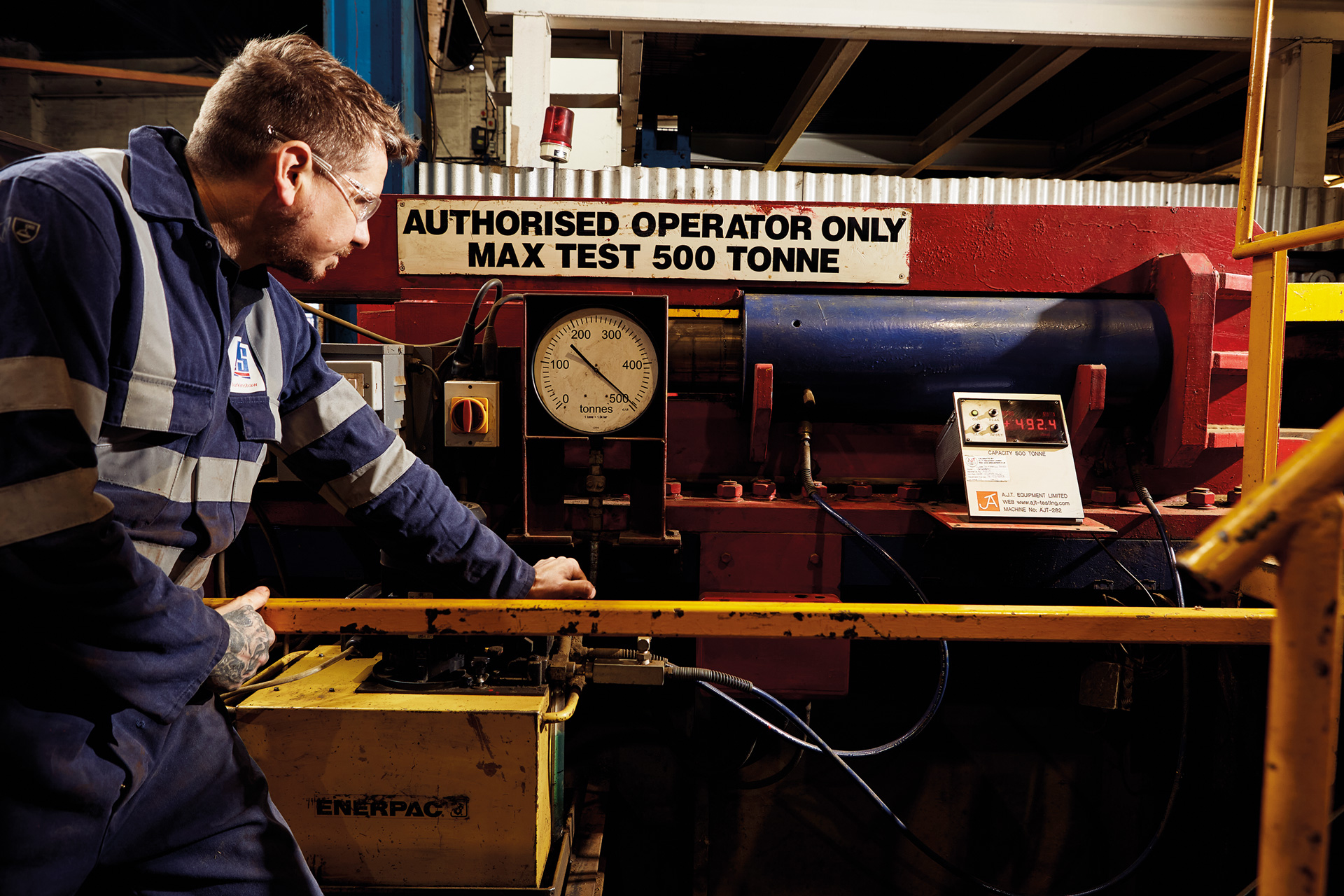
Proof load testing checks the strength, stability, and safety of lifting equipment and structures. It confirms that equipment can handle loads above its normal working limit before use.
As a result, businesses can operate safely and meet compliance requirements. This type of testing also supports LOLER regulations. For further details, refer to guidance provided by the HSE.
What Is a Proof Load Test?
A proof load test applies a controlled load to lifting equipment or a structure. This test confirms that the equipment performs safely under stress.
Typically, the applied load exceeds the normal working load limit. Therefore, it provides confidence that the equipment will perform safely during everyday use.
Teams often carry out this testing after installation, repair, or modification. In addition, it forms part of ongoing compliance checks.
Can Testing Be Carried Out On Site or at Your Premises?
You can carry out proof load testing on site or at a dedicated facility. The best option depends on the equipment and project requirements.
On-site testing works well for large or fixed equipment. For example, overhead cranes and structural lifting points often remain in place during testing. As a result, disruption stays minimal.
However, smaller equipment can be tested off-site. Controlled environments allow for more detailed inspection and testing. In turn, this can improve accuracy.
What Equipment Requires Proof Load Testing?
Many types of lifting equipment require proof load testing. These include cranes, hoists, lifting beams, spreader beams and lifting frames.
In addition, engineers may test bespoke lifting equipment and structural elements. For example, runway beams, lifting points and anchor systems often require testing.
In simple terms, if equipment lifts or supports a load, it usually requires testing. Therefore, regular checks help maintain safety and compliance.
Ensuring Compliance and Safety
Proof load testing supports safe operations. It helps reduce risk, prevent failures and protect both people and equipment.
In addition, businesses must comply with PUWER regulations. These rules ensure that equipment remains suitable, maintained and safe to use. You can read more about PUWER requirements on the HSE website.
Need Advice on Proof Load Testing?
If you need help with Proof Load Testing or want advice on compliance, inspections, or documentation, speak to LMT Hire Ltd today.
Call us on 01709 223 113 or contact our team online for expert guidance.